
10,000T forging presses
author: ANZOOWHEELS
2024-05-13
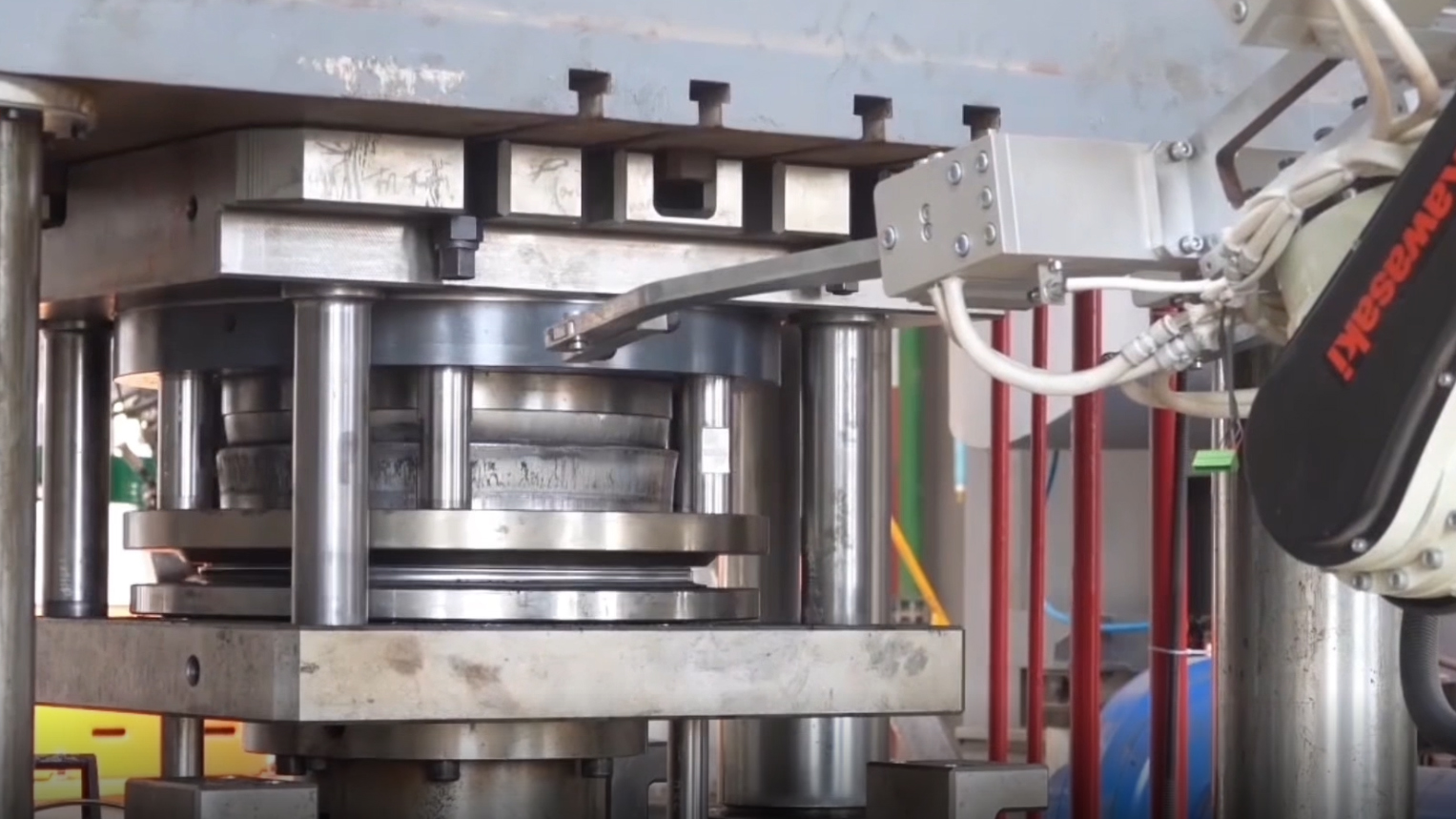
When a mechanical pressure machine tool is working, the electric motor drives the large pulley (usually also used as a flywheel) through a V-belt, and drives the crank slider mechanism through a gear pair and clutch, causing the slider and convex mold to move down in a straight line. After the forging work is completed, the slider returns upward, the clutch automatically disengages, and at the same time, the automatic actuator on the crankshaft is turned on, causing the slider to stop near the top dead center. When a mechanical press is in operation, the electric motor drives the large pulley (usually also used as a flywheel) through a V-belt, and drives the crank slider mechanism through a gear pair and clutch, causing the slider and convex mold to move down in a straight line. After the forging work is completed, the slider returns upward, the clutch automatically disengages, and at the same time, the automatic actuator on the crankshaft is turned on, causing the slider to stop near the top dead center.
The essence of roll forging deformation is the rolling extension of the billet, where the section of the billet becomes smaller and the length increases. When the cross-section deformation is large, it needs to be completed by several passes and multiple rolls. The process design mainly determines the reasonable reduction, widening, and elongation deformation of each step of roll forging. They depend on deformation conditions such as the size of the roller diameter, the shape and size of the hole, the temperature of the blank, and cooling lubrication. Some double support roll forging machines have a roller shaft extending at one end. This is a composite roll forging machine that combines cantilever and double support types. It can achieve both longitudinal roll forging and transverse widening forming at the cantilever end. In large-scale roll forging production, mechanical arms are widely used to transport workpieces, achieving automation of the production process, improving productivity, and reducing labor intensity.
A forging method in which a convex die is used to apply pressure to a billet placed in a concave die, causing plastic flow and obtaining a workpiece with a corresponding hole or concave convex die shape. During extrusion, the billet generates three-dimensional compressive stress, and even the billet with lower plasticity can be extruded into shape. Extrusion, especially cold extrusion, has a high material utilization rate, improved material structure and mechanical properties, simple operation, high productivity, and can be used to produce long rods, deep holes, thin-walled, and special-shaped section parts. It is an important non cutting machining process. Extrusion is mainly used for the forming of metals, and can also be used for the forming of non-metallic materials such as plastics, rubber, graphite, and clay billets.
Each crank slider mechanism is called a "point". The simplest mechanical press adopts a single point type, which only has a crank slider mechanism. Some large working face mechanical presses use two-point or four point systems to ensure even force distribution and smooth movement of the slider base.
The load of a mechanical press is impulsive, meaning that the forging work time is very short within one working cycle. The maximum power in a short time is more than ten times higher than the average power, so flywheels are installed in the transmission system. After starting the motor selected according to the average power, the flywheel runs to the rated speed and accumulates kinetic energy. After the convex mold contacts the billet and begins forging work, the driving power of the motor is less than the load, the speed decreases, and the flywheel releases the accumulated kinetic energy for compensation. After the forging work is completed, the flywheel accelerates again to accumulate kinetic energy for future use.
The essence of roll forging deformation is the rolling extension of the billet, where the section of the billet becomes smaller and the length increases. When the cross-section deformation is large, it needs to be completed by several passes and multiple rolls. The process design mainly determines the reasonable reduction, widening, and elongation deformation of each step of roll forging. They depend on deformation conditions such as the size of the roller diameter, the shape and size of the hole, the temperature of the blank, and cooling lubrication. Some double support roll forging machines have a roller shaft extending at one end. This is a composite roll forging machine that combines cantilever and double support types. It can achieve both longitudinal roll forging and transverse widening forming at the cantilever end. In large-scale roll forging production, mechanical arms are widely used to transport workpieces, achieving automation of the production process, improving productivity, and reducing labor intensity.
A forging method in which a convex die is used to apply pressure to a billet placed in a concave die, causing plastic flow and obtaining a workpiece with a corresponding hole or concave convex die shape. During extrusion, the billet generates three-dimensional compressive stress, and even the billet with lower plasticity can be extruded into shape. Extrusion, especially cold extrusion, has a high material utilization rate, improved material structure and mechanical properties, simple operation, high productivity, and can be used to produce long rods, deep holes, thin-walled, and special-shaped section parts. It is an important non cutting machining process. Extrusion is mainly used for the forming of metals, and can also be used for the forming of non-metallic materials such as plastics, rubber, graphite, and clay billets.
Each crank slider mechanism is called a "point". The simplest mechanical press adopts a single point type, which only has a crank slider mechanism. Some large working face mechanical presses use two-point or four point systems to ensure even force distribution and smooth movement of the slider base.
The load of a mechanical press is impulsive, meaning that the forging work time is very short within one working cycle. The maximum power in a short time is more than ten times higher than the average power, so flywheels are installed in the transmission system. After starting the motor selected according to the average power, the flywheel runs to the rated speed and accumulates kinetic energy. After the convex mold contacts the billet and begins forging work, the driving power of the motor is less than the load, the speed decreases, and the flywheel releases the accumulated kinetic energy for compensation. After the forging work is completed, the flywheel accelerates again to accumulate kinetic energy for future use.
CNC machine tool group
Three coordinate measuring instrument
Related Article
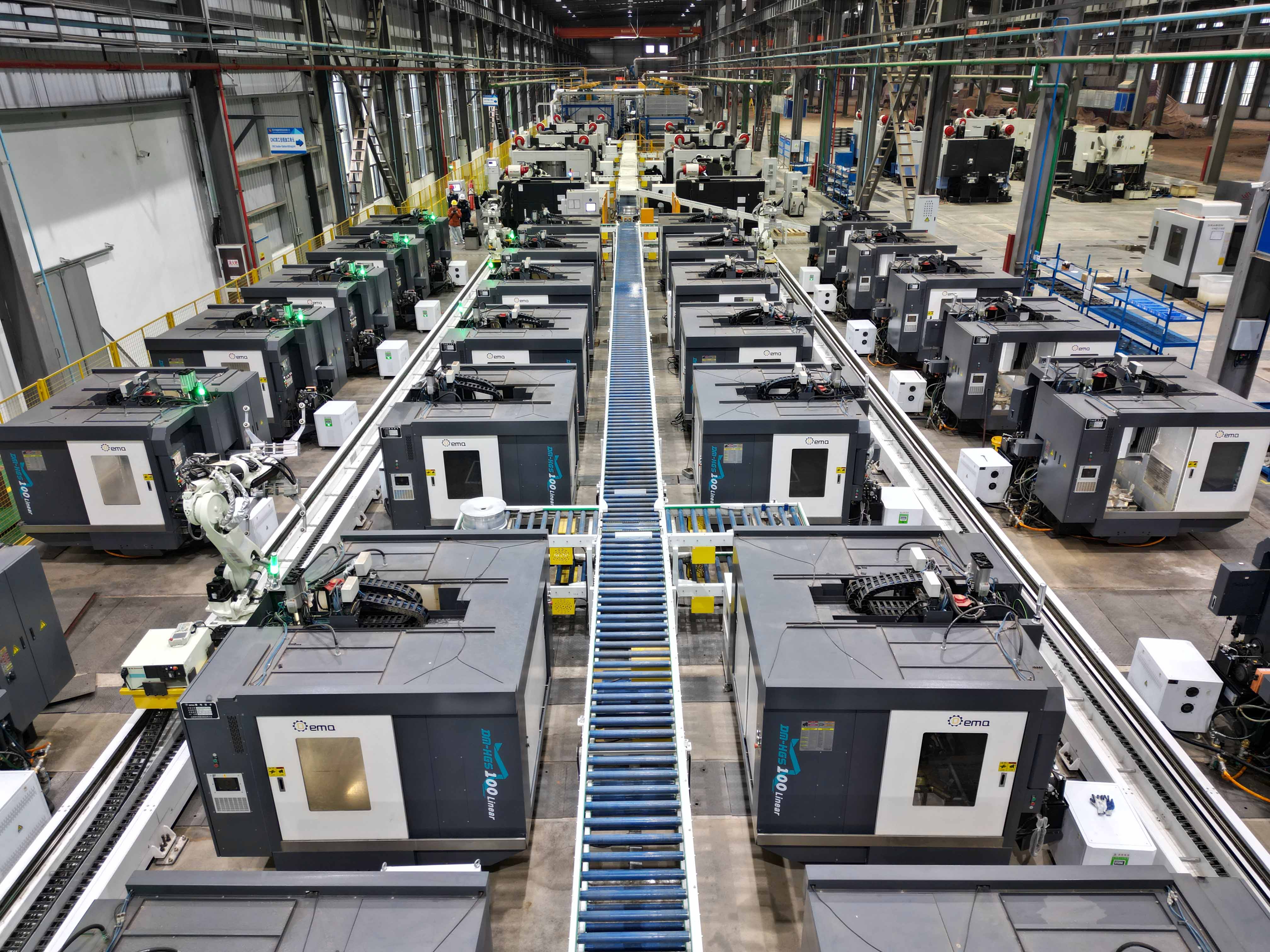
It involves 10 high-end, intelligent, and automated forging aluminum alloy wheel production lines. Each production line is equipped with 3 sets of double-station forging machines and 1 set of 4-station spinning machines. We could produce 15 million lightweight high-grad forged aluminum alloy wheels per year.
CNC machine tool group

The three-axis adopts natural high-precision granite guide rails, ensuring the same overall thermodynamic performance and avoiding machine accuracy errors caused by different thermal expansion coefficients due to different three-axis materials.
Three coordinate measuring instrument
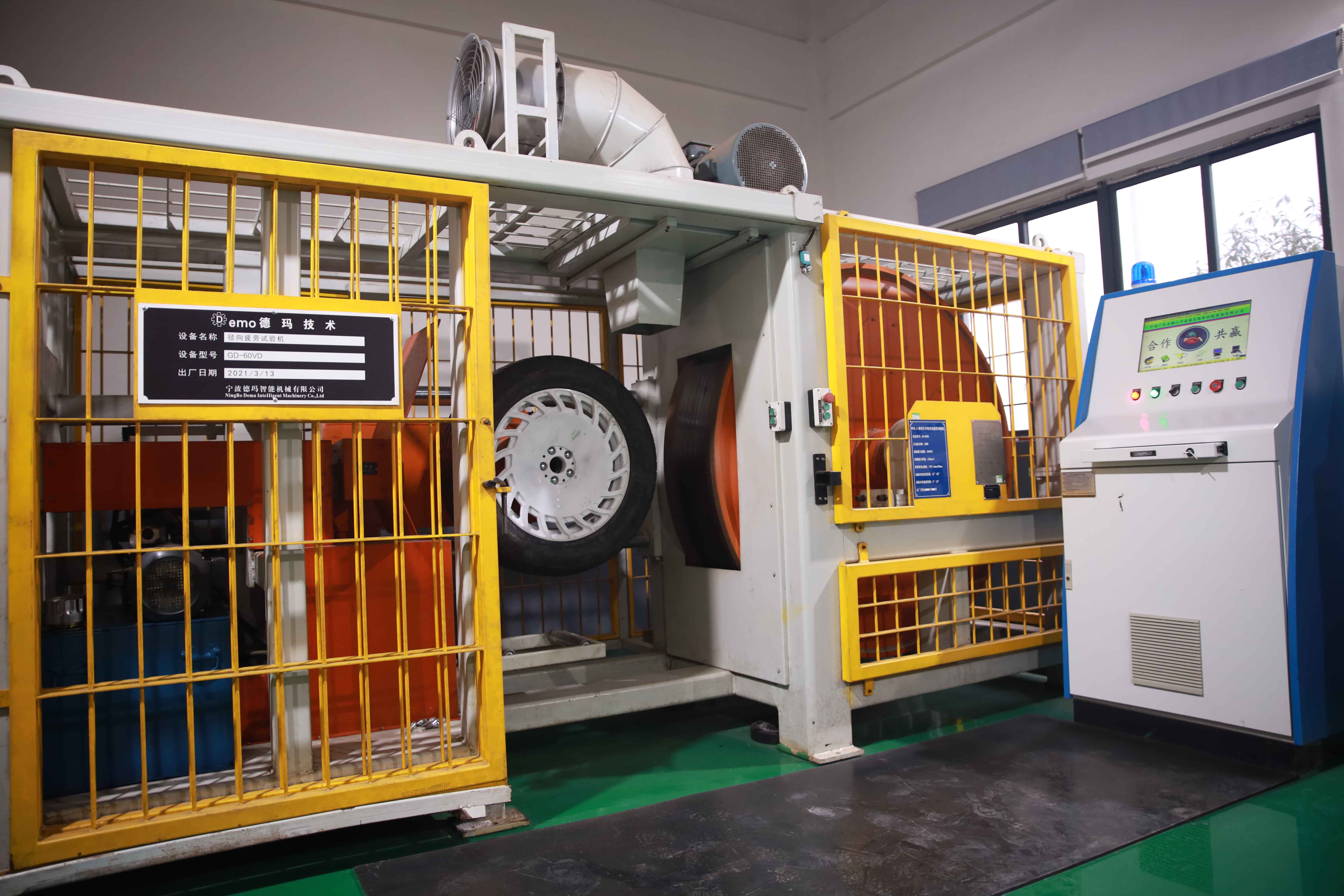
This article develops a new type of radial fatigue testing machine for wheels based on the customer's requirements for the testing machine.
Radial fatigue testing machine
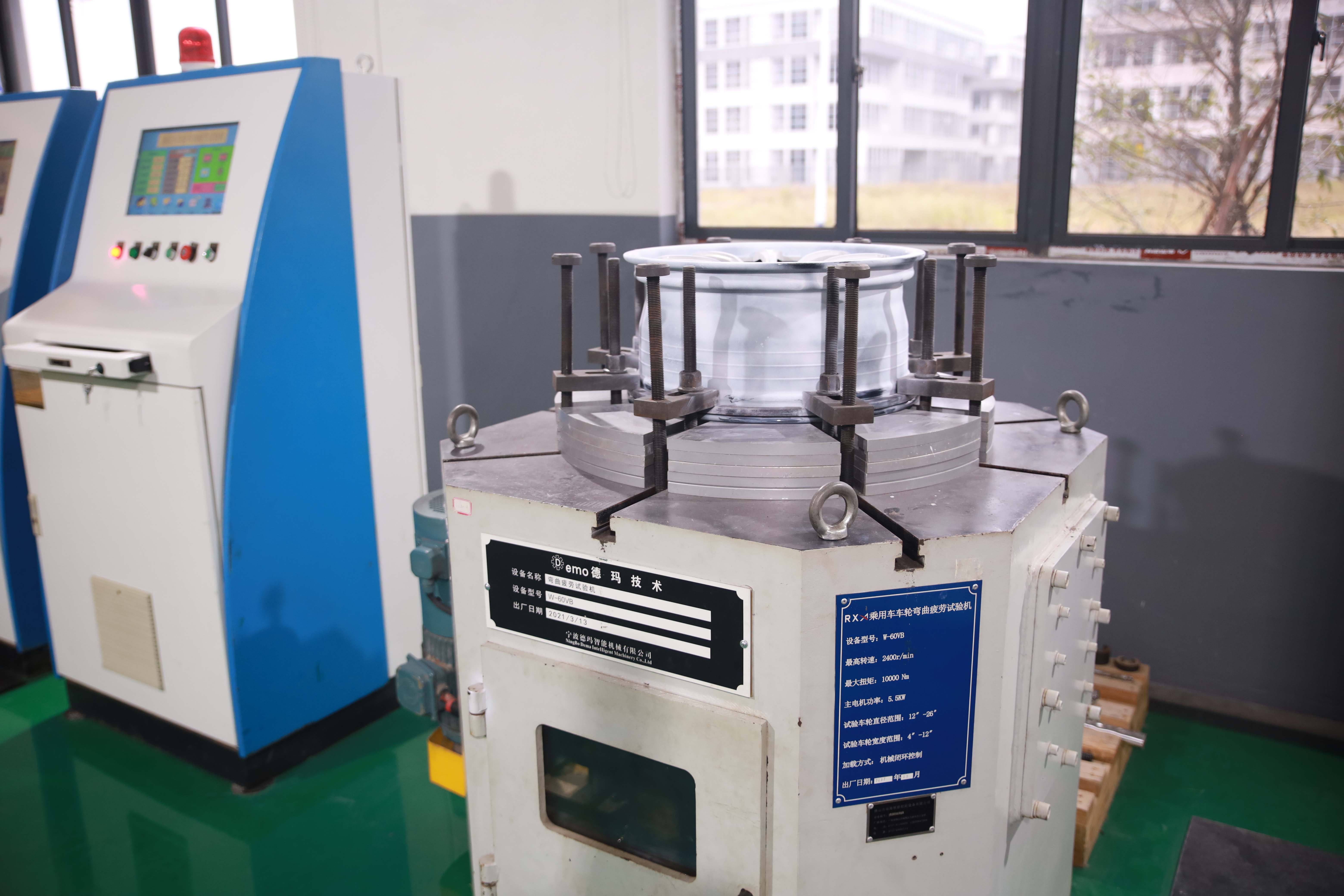
The dynamic bending fatigue test is a simulation of the ability of a vehicle's wheels to withstand bending moments while continuously turning during driving. The test equipment should have a rotating device and a force application device, as shown in Figure 9-26. The reference standard is "QC/T 22l-1997 Performance Requirements and Test Methods for Automotive Light Alloy Wheels".
Safety testing fatigue testing machine