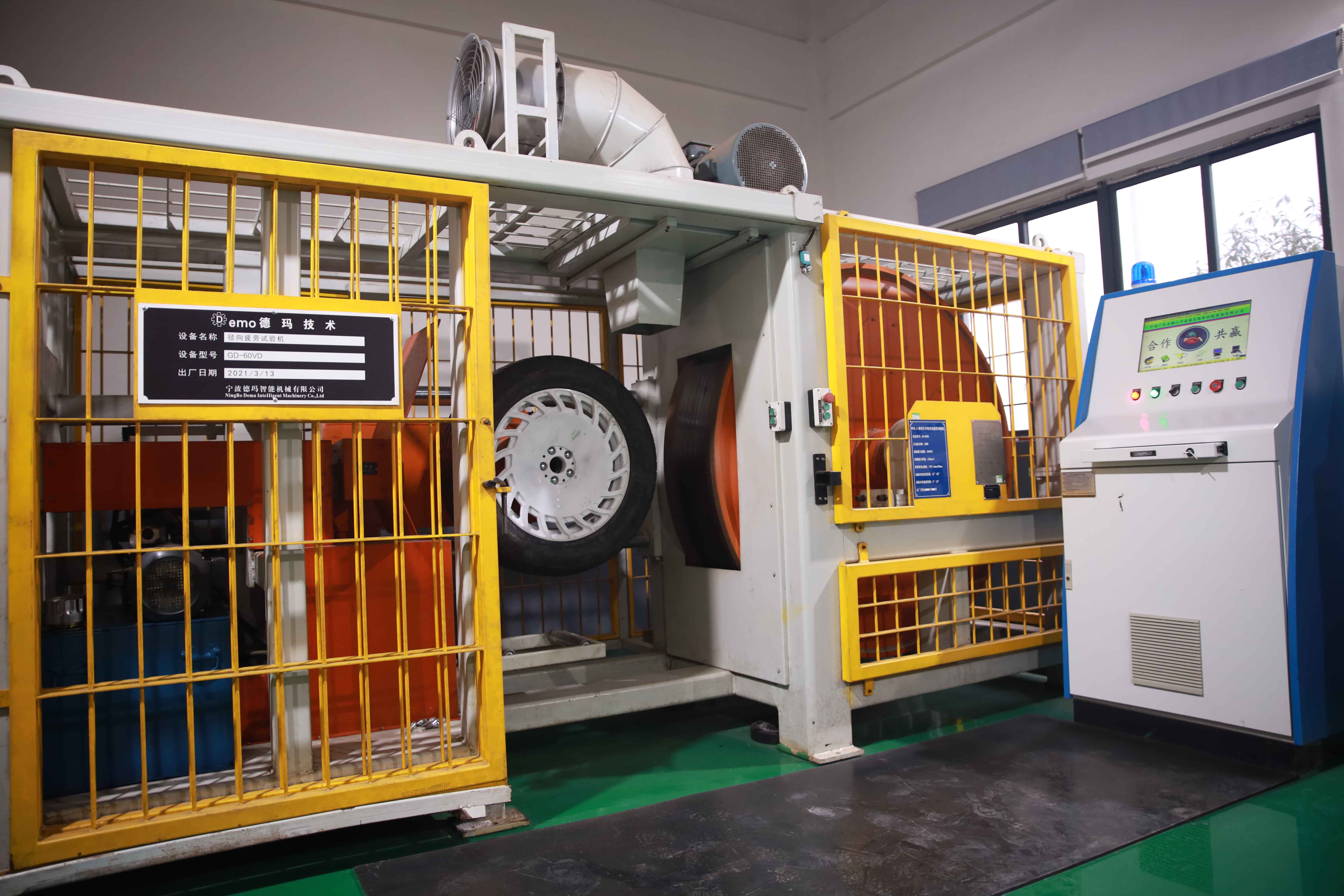
Safety testing fatigue testing machine
author: ANZOOWHEELS
2024-05-09
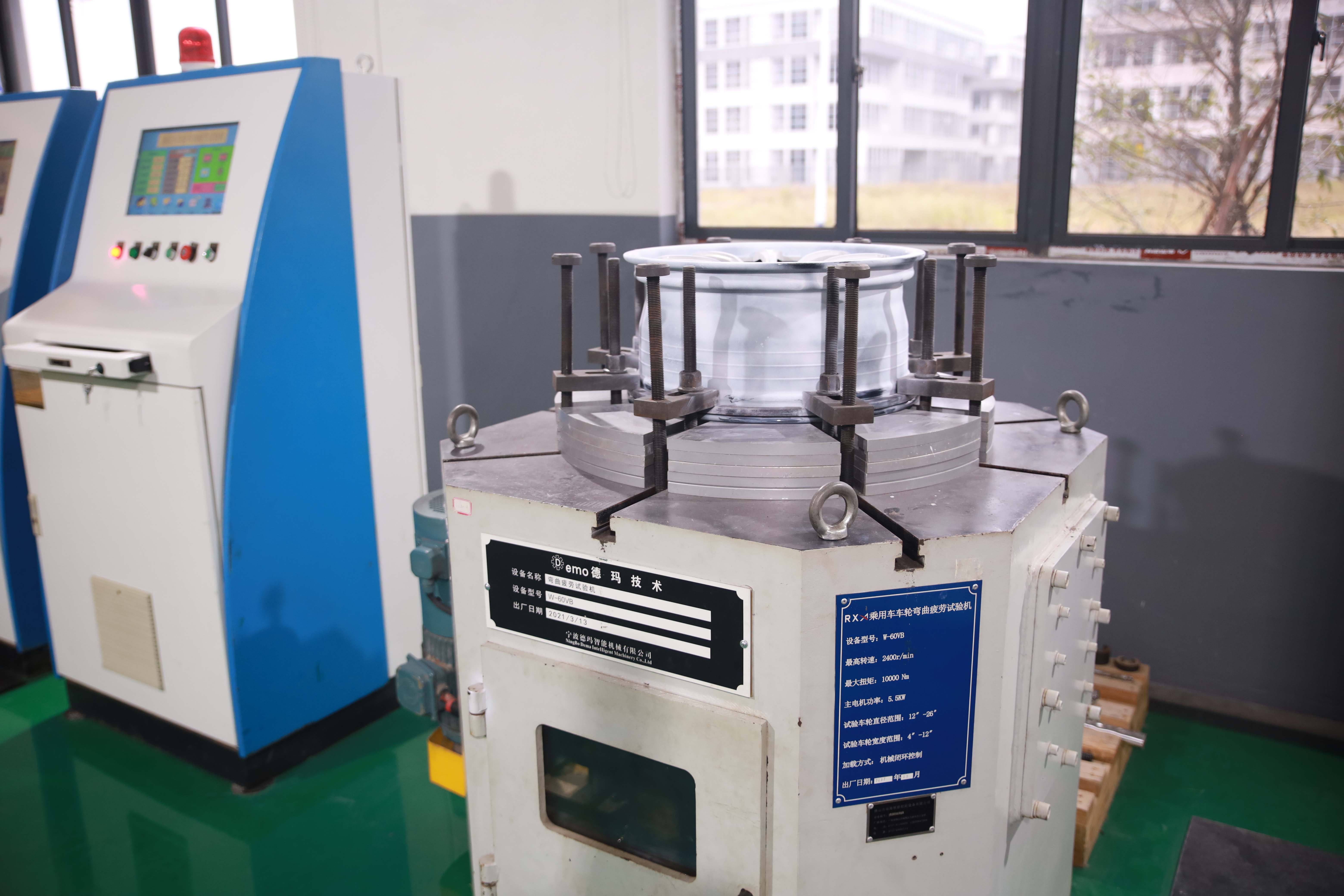
The dynamic bending fatigue test is a simulation of the ability of a vehicle's wheels to withstand bending moments while continuously turning during driving. The test equipment should have a rotating device and a force application device, as shown in Figure 9-26. The reference standard is "QC/T 22l-1997 Performance Requirements and Test Methods for Automotive Light Alloy Wheels".
1. Determination of test bending moment
Calculation of test bending moment:
M:( μ In the R+d) FS formula, M is the test bending moment, (N. m); μ Set the friction coefficient between the tire and the road to 0.7; R is the maximum static load radius of the tire specified by the wheel factory or automobile manufacturing plant for the wheel (m); D is the offset of the wheel (m); F is the maximum rated load of the wheel (N); S is the coefficient of reinforcement testing.
2. Failure determination
1) There are visible fatigue cracks in any part of the wheel after the test (using various acceptable testing methods, such as
Color penetration method.
2) The wheels cannot continue to carry the test to the specified number of cycles.
3) Before the number of test cycles reached, the offset change of the loading point had exceeded the initial full loading offset
20% of the quantity.
If the above phenomenon occurs, it is judged that the wheel is invalid and the wheel is unqualified.
3. Precautions
1) Before the experiment, the jumping should be corrected up and down as much as possible.
2) The loading system of the testing machine should maintain the specified load, and the error should not exceed ± 2.5%.
3) During the test, if the bolt breaks or the nut becomes loose, it can be replaced. After re tightening, the test can continue.
4) The testing machine should be calibrated regularly, and it is recommended that the loading system be calibrated pneumatic every six months and hydraulic every year.
1. Determination of test bending moment
Calculation of test bending moment:
M:( μ In the R+d) FS formula, M is the test bending moment, (N. m); μ Set the friction coefficient between the tire and the road to 0.7; R is the maximum static load radius of the tire specified by the wheel factory or automobile manufacturing plant for the wheel (m); D is the offset of the wheel (m); F is the maximum rated load of the wheel (N); S is the coefficient of reinforcement testing.
2. Failure determination
1) There are visible fatigue cracks in any part of the wheel after the test (using various acceptable testing methods, such as
Color penetration method.
2) The wheels cannot continue to carry the test to the specified number of cycles.
3) Before the number of test cycles reached, the offset change of the loading point had exceeded the initial full loading offset
20% of the quantity.
If the above phenomenon occurs, it is judged that the wheel is invalid and the wheel is unqualified.
3. Precautions
1) Before the experiment, the jumping should be corrected up and down as much as possible.
2) The loading system of the testing machine should maintain the specified load, and the error should not exceed ± 2.5%.
3) During the test, if the bolt breaks or the nut becomes loose, it can be replaced. After re tightening, the test can continue.
4) The testing machine should be calibrated regularly, and it is recommended that the loading system be calibrated pneumatic every six months and hydraulic every year.
Radial fatigue testing machine
Wheel hub impact test
Related Article
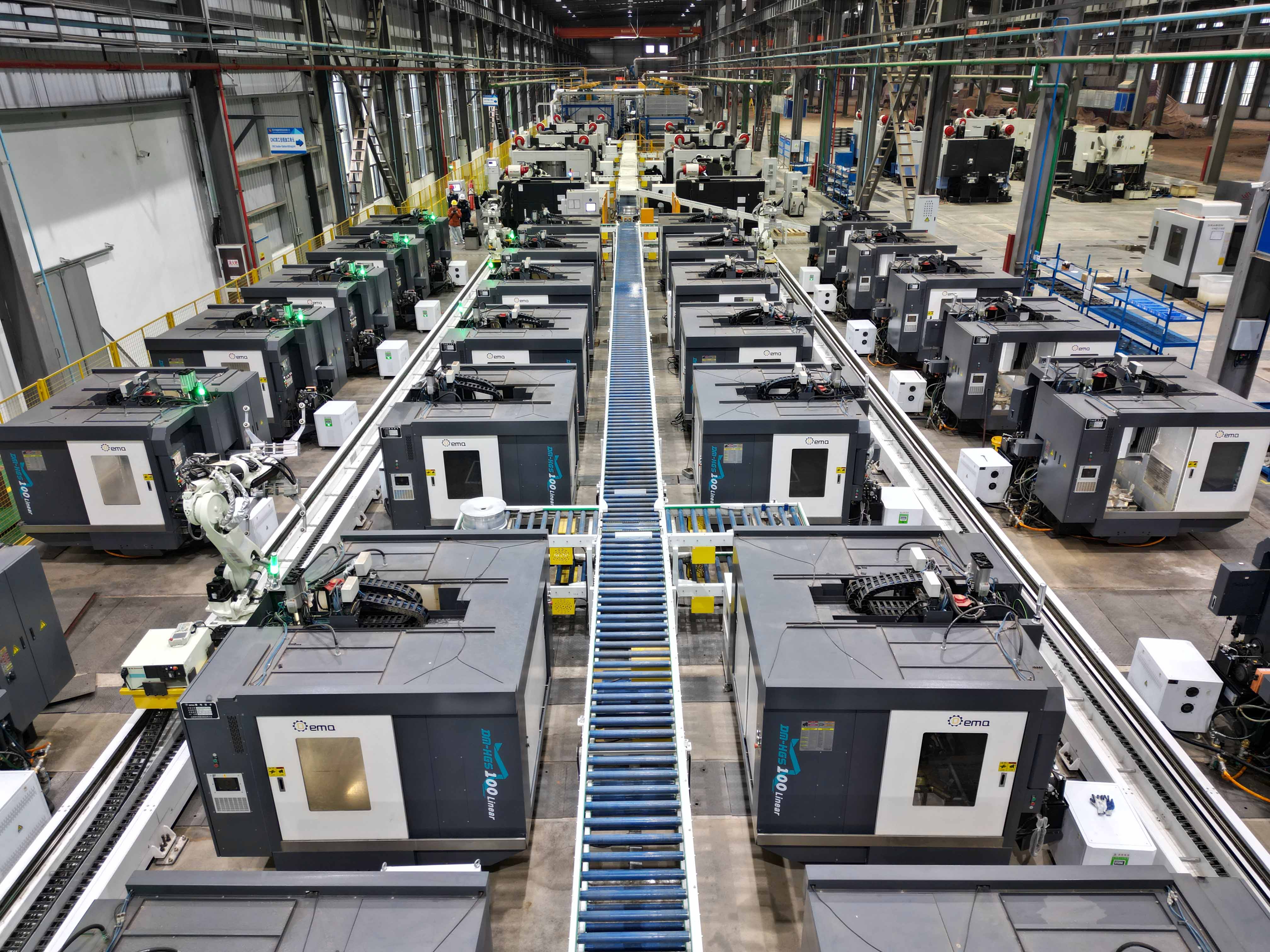
It involves 10 high-end, intelligent, and automated forging aluminum alloy wheel production lines. Each production line is equipped with 3 sets of double-station forging machines and 1 set of 4-station spinning machines. We could produce 15 million lightweight high-grad forged aluminum alloy wheels per year.
CNC machine tool group
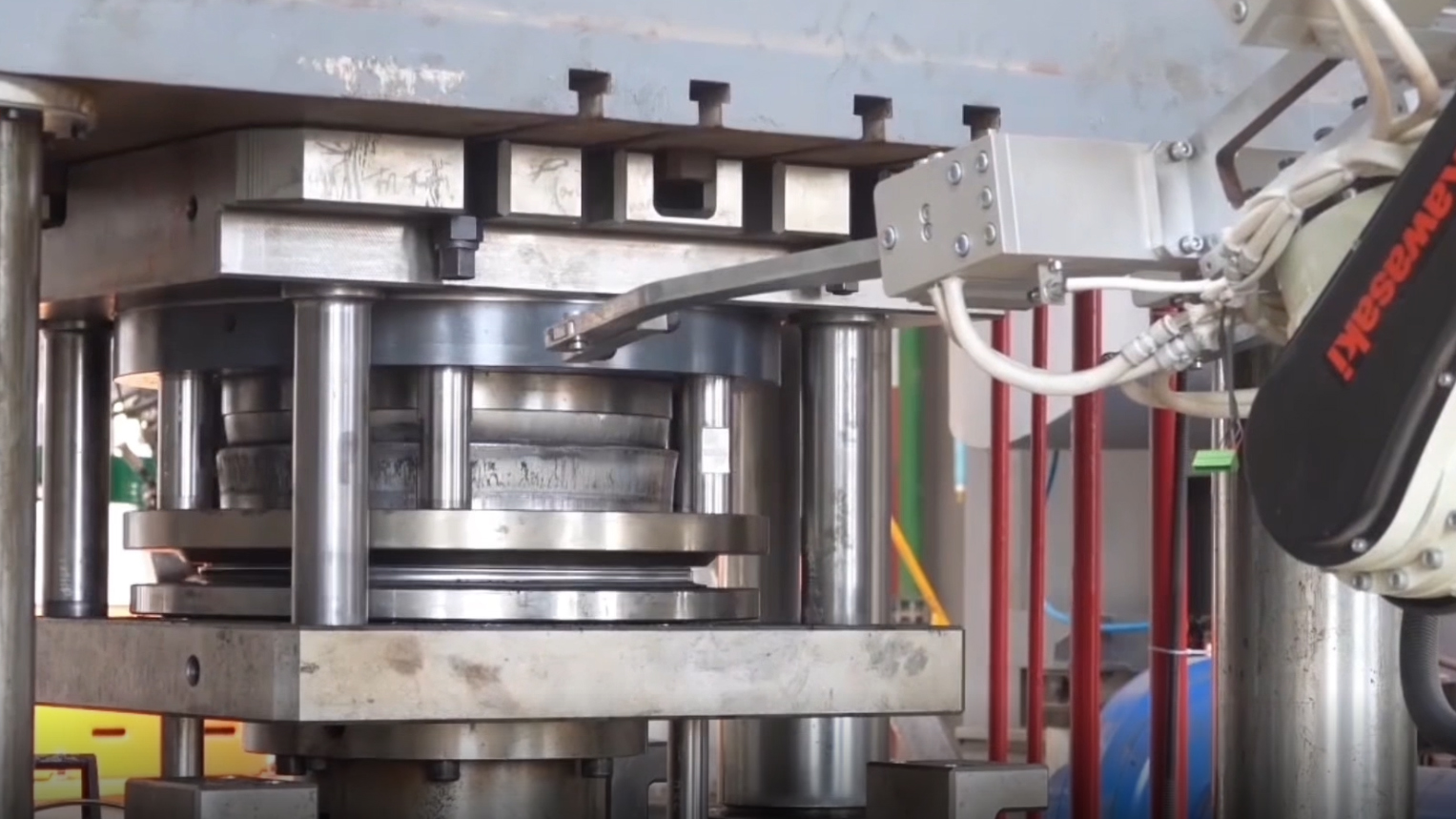
The company has invested around $22Bn (US$252M) to enlarge the Forging Section's South Plant to house an entire production line.
10,000T forging presses